What Does Anyone Know About Goddesses?
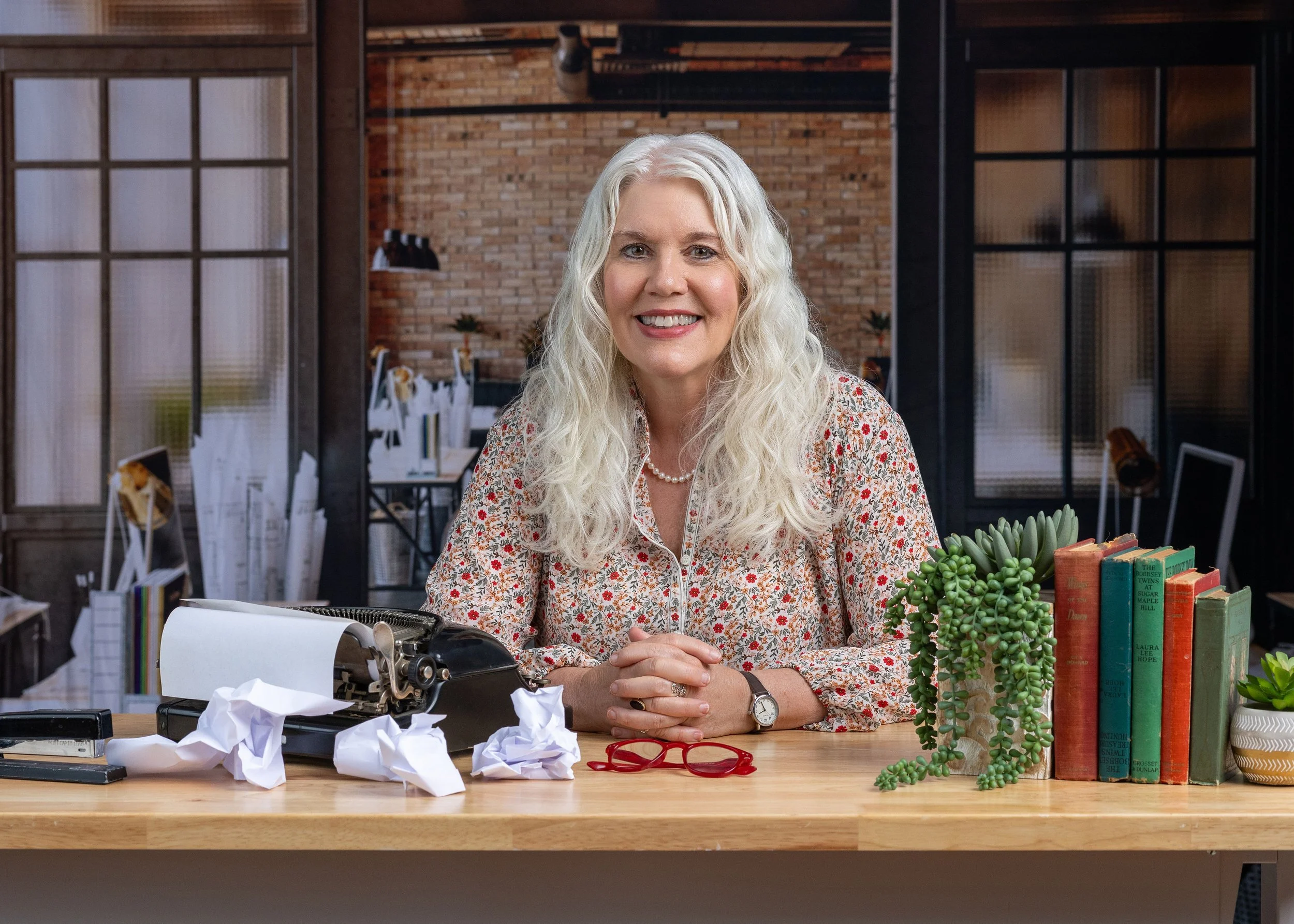
An interview with author, Gina Malone, by Marga Fripp
In her debut poetry collection, Gina Malone explores grief, memory, and the quiet divinity within ordinary women — the overlooked goddesses of daily life. This book is a cinematic collection of truth-telling poems, presented as "glimpses, or sketches, not portraits... just enough that readers gain a sense of a life lived." For Malone, poetry itself became a companion in grief and transformation.
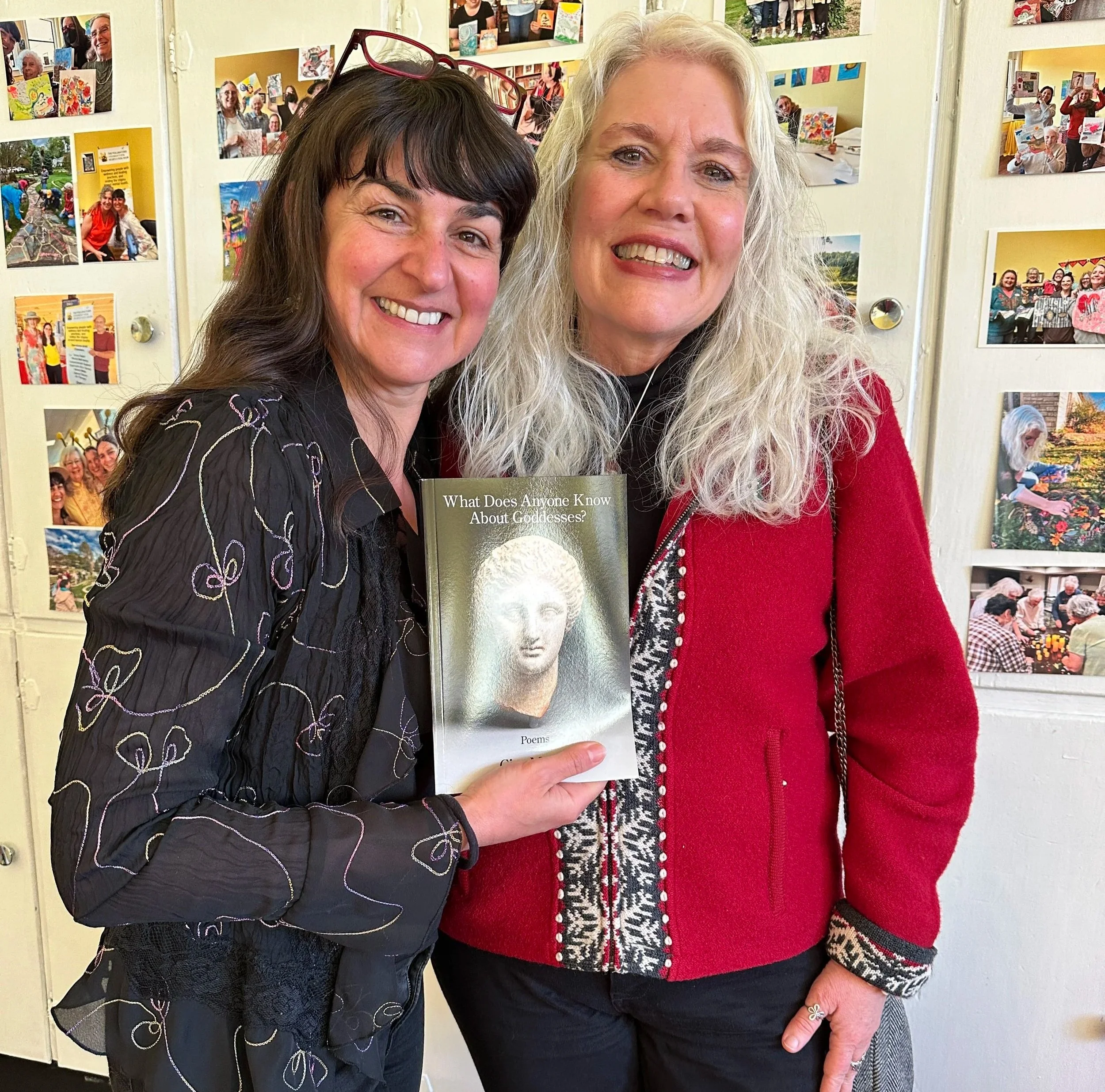
A book launch and conversation with the author will be held Thursday, April 9, from 6–8 p.m. at The Healing Hive of The Pollinators Foundation in Waynesville. Learn more and register here. Order books at GinaMaloneWriter.com.
The result is a luminous collection that invites readers to reconsider mothers, daughters, and the quiet divinity hidden within ordinary lives. We sat down with Gina to learn more.

What inspired you to write this book, and when did you realize it was evolving into a cohesive collection rather than a series of individual poems?
The first poems I wrote after my mother died in 2022 were heavy, just a spill of grief onto the page. At some point, it became more about telling her story as a way of honoring her life and the love she had given her family and, in a way, also letting her speak, trying to channel what she might have wanted to say, or might have wanted us to know about her life. I kept writing poems like these and, eventually, had the vague idea of collecting them in a book. It wasn’t until the idea of including Hestia came to me that I figured out I wanted to weave in poems about her and find the parallels between a goddess and a mortal woman. I envisioned writing about my mom as if she had been elevated to a goddess and writing about the goddess Hestia as if she were also just a woman at heart and in her daily life. Eventually, I had more than enough poems for a chapbook.
Titles often hold a hidden doorway into the soul of a work. What is the significance of the book’s title, and how does it reflect the emotional or spiritual landscape of the poems within?
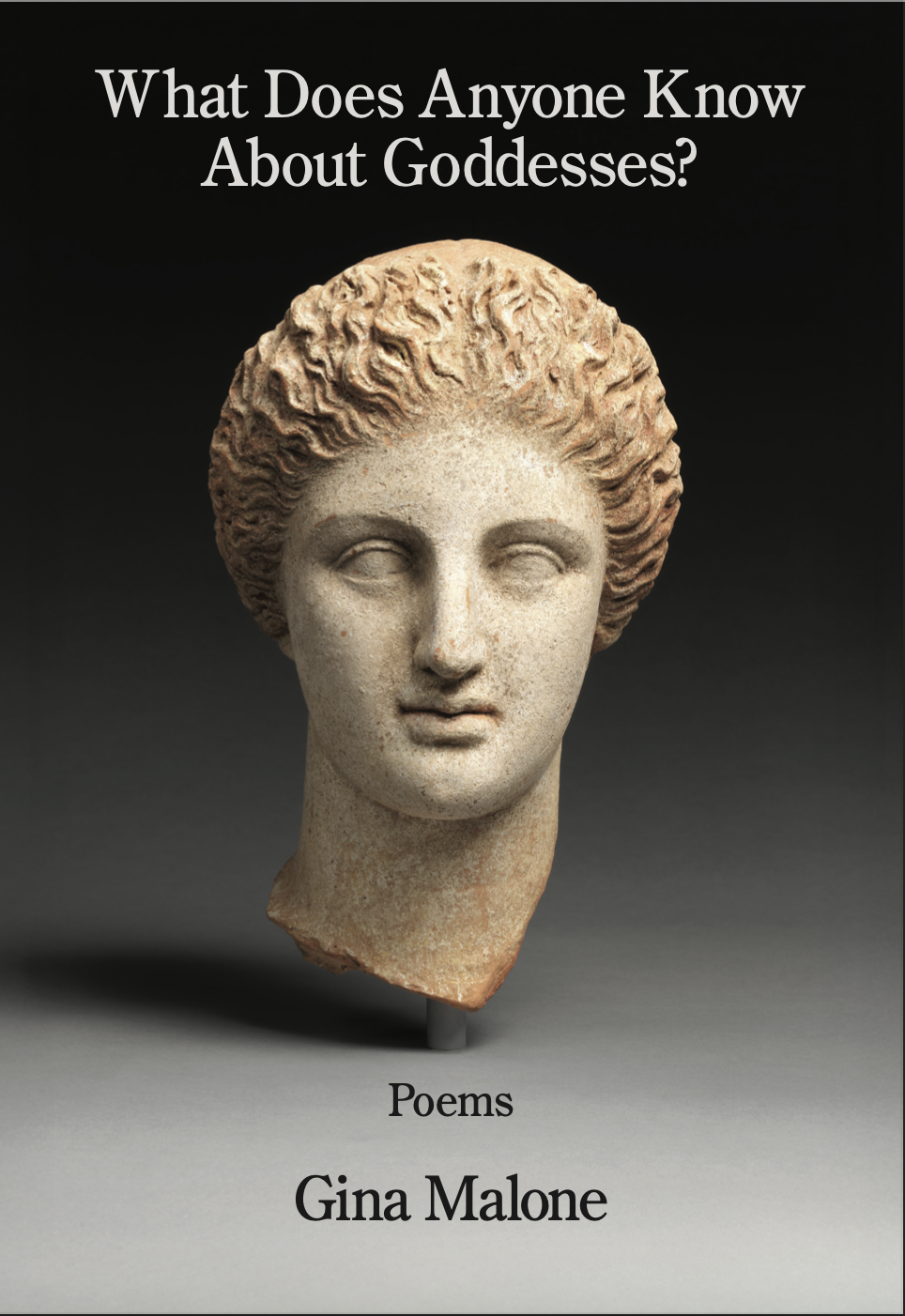
The title poem, “What Does Anyone Know About Goddesses?”, came to me as I realized, first, that I didn’t feel as if I had let my mother know enough how much I appreciated her strength, her perseverance, her support, and the care and love she gave to me. And, too, I couldn’t find satisfying stories about Hestia in the books of Greek mythology that I had. I would learn that that’s because there are only a couple of stories about her and hardly any references at all to her in comparison to her Olympian brothers and sisters. She was an overlooked goddess.
The title reflects the truth that women have public selves in our roles as mothers, wives, daughters, sisters, and even friends, but we also have secret selves, probably remnants of our girlhood days when we felt freer to just be. No one really knows any other person through and through, but it seems doubly so with our mothers. Society projects onto mothers what they should be, and we see our mothers, selfishly, in relation to ourselves as her children.
We forget that mothers were little girls once and young women with dreams and that, even in motherhood (a goddess role if there ever was one), there is a little girl there still trying to figure it all out—how she got there, how to be a mother, whether this is the life she imagined for herself, if what she has is happiness—wondering, too, sometimes where her girl self is hiding.
Writing can be both a creative and personal pilgrimage. What did you learn through the creative process of bringing this book into being about poetry, about storytelling, and about the practice of inner listening?
About poetry, I learned that it truly is healing—both to read it and to write it. Journaling during a time of grief, to me, feels heavy and depressing, but with poem-making I feel free to go lighter, to bring in humor even, to remember in a joyous and appreciative way rather than in a regretful one. I think it’s because with journaling, I feel as if I’m talking to myself and with poetry, I feel that the whole world, magically, is my audience.
About storytelling: Many of my poems are narrative in form and in substance. These poems about my mother needed to do that—tell stories. They needed to tell her stories, but as sketches, not portraits. Not all-encompassing and full of details, just enough that readers gain a sense of a life lived—her life but also the lives of many women like her. From girlhood to motherhood to death and some of the moments in between. In a way, such a collection feels cinematic, the way a movie will show glimpses as a character recalls moments from their life. An Irish writer, William Trevor, whose fiction I admire, talked about “the art of the glimpse”. That’s what these poems were to me: glimpses. It’s what I wanted them to be to readers.
About inner listening: Writing poetry is always inner listening to me. I hear the words in my head first and then I write them. And I think, with these poems, I heard my mother’s voice, too, or felt that urgency that might have been hers to tell the world about some parts of her life.
Many readers can sense a thread of relationship and lineage in your writing. Were there any revelations or unexpected understandings about yourself, or about your mother, that emerged while shaping these poems?
I do tend to write a lot about relationships in my poetry—among people, with nature, with self. I don’t always find the answers, but my poems are searchlights for meaning. The poems are questions; I think all poems are. They search and ask without the sense even that an answer or the answer has to be found. Poems are musings. They are paying attention to what you’re thinking about, wondering about, what worries you, or what you think about in that sleepless time at 3 a.m. And, too, they’re ways of honoring people, thoughts, Nature, the self, history, or a means of recording what isn’t good, what is unjust or sad or unspeakable—little bits of life that can’t be expressed in any other way except as poetry.
What kind of readers do you feel may be especially drawn to this collection? Is there a particular emotional or life season where these poems might offer companionship, reflection, or resonance?
I think women will certainly understand and relate to the poems, whether from the viewpoint of a wife, a daughter, or a mother. And, perhaps, especially women 40 and older. I know, for me and for my mother, too, that decade of the 40s felt like a time of reclaiming happiness, of going in search of the young girls we used to be, of that joie de vivre, of that part of the self that is true, the part that never stops dreaming and hoping, that never “grows up”. She is the innocent part of ourselves that has not been told that society has different rules for women, a set of expectations that are likely to be unrealistic and unattainable, and are not the ones we necessarily have for ourselves. And I do think that that girlish essence is reclaimable later in life. She is often the creative parts of ourselves. And, perhaps, anyone—man, woman, or child—who wants to view mothers through a different lens will find meaning in the poems. Ultimately, I want them to be paths into appreciating all women and their selflessness, what they accomplish, and how they have to navigate the world.
Looking back, how did this book change you as a writer — and as a human being? Did your creative rituals, perspective, or voice shift in ways you didn’t anticipate?
What I wasn’t sure about was collecting poems into a cohesive, connected, and narrative whole. I worked on that during a writing retreat in Virginia. The best piece of advice I found online was that if asked to do so, a poet should be able to explain why each and every poem holds the particular place it does in the collection. What was difficult was narrowing the poems into a manuscript of 30-35 pages. Once I got over the fear, arranging the poems in their “proper places” turned out to be fun, a sort of a puzzle. It felt a little like making the poems act as a novel or a biography would—offering select details, a narrative thread, and central and supporting characters. I found satisfaction in something that had always drawn me to poetry, but that is not necessarily associated with poetry, and that’s the narrative element, the stories behind each poem and the overall story that the poems, together, tell. And then there is the unspoken as well—what gets left out, what we leave to the reader’s imagination.
As this book enters the world, what new creative paths or projects are beginning to unfold for you? Are there themes or explorations you feel called to continue or venture in more deeply?
At this point, I don’t know what my next project will be. I’ve considered a novel—a long-time dream of mine—and also a book of essays about my years with my partner Richard, maybe intertwined with some ekphrastic poetry since he was a landscape painter. After Richard’s death in early October, 2025, I decided to give myself a year of just being open to possibility in all aspects of my life, and that’s what I’m doing. I’ve dipped a toe in by beginning to write poetry again, some of them poems about Richard, but even there I want to be open daily to whatever wants to come out and not force a topic or a project at this time.
What Does Anyone Know About Goddesses?, November 2025, poetry, paperback, $20, by Gina Malone, and published by Kelsay Books, American Fork, UT.